
Bridging the Gap of Accountability for Ukraine: A Special Tribunal for Aggression

From the early days of Russia’s war of aggression against Ukraine, there have been clarion calls for individual criminal accountability. The blatant act of military aggression ordered by Russia’s political leadership, and the prolonged, indiscriminate bombardment of towns and villages on a scale not seen in Europe since World War II, has upended the international legal order. While Western states have rallied to sustain their Ukrainian ally with political and military support, politicians, lawyers and scholars speak of the critical need for this aggression to be prosecuted in a special, international court of law. But political reluctance on key legal issues has led to deadlock, and resolute diplomatic action is needed to progress the vital issue of legal accountability.
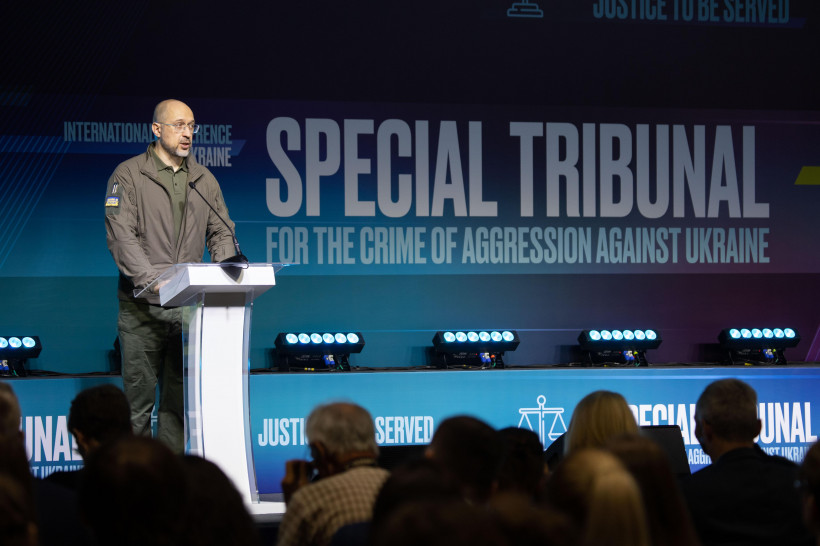
(Photo source: https://www.kmu.gov.ua/)

Creating a new ‘Special’ Tribunal for the Crime of Aggression

The need for a new court is deemed necessary because the International Criminal Court (ICC) lacks jurisdiction for the crime of aggression, but otherwise has the ability to prosecute a full panoply of war crimes, crimes against humanity and genocide. Indeed, the court has already issued arrest warrants for President Vladimir Putin and Commissioner for Children’s Rights, Maria Lvova-Belova, for the war crime of unlawfully deporting children from Ukraine into Russia.

Continue reading

Meaningful victim participation – but only if you can pay for it?


OLYMPUS DIGITAL CAMERA

Near Gulu, Uganda


On May 26th, the Single Judge of the Trial Chamber IX denied legal aid to 2/3 of victims participating in the Ongwen case – the ICC’s only case so far in relation to the Lord’s Resistance Army rebellion that for years terrorized communities in northern Uganda. The Single Judge’s decision does not come as a complete surprise: it affirms the interpretation of rules on financial  assistance for victims proposed by the Pre-Trial Chamber in November 2015, which I wrote about previously. In a broader perspective, it is not only a decision on legal aid, it is a step towards focusing victims’ representation with the ICC’s Office of Public Counsel for Victims (OPCV) and limiting victims’ procedural rights, specifically victims’ right to choose their legal representative.

Currently, a total of 2064 victims are admitted to participate in the trial, scheduled to begin in December. Why were 1434 of these victims denied legal aid? Have they failed to prove their indigence? Have their lawyers failed to meet the standards of quality and cost efficient representation?  No. The reasons underlying the Single Judge’s decision have nothing to do with the victims’ indigence or performance of their counsel. The 1434 victims were denied legal aid because they agreed to choose the same representative without engaging the Court’s assistance. Unlike the remaining 592 victims, who made no decision on their legal representation and for whom the Chamber appointed the ICC’s OPCV to act as a Common Legal Representative (CLR), these 1434 victims have fully exercised their freedom to choose a legal representative in accordance with the rules. Importantly, their choice has been approved by the Court as being without prejudice to the effectiveness of proceedings. This decision strikes a blow to meaningful victim participation, it is based on a mid-reading of the rules and is inconsistent with previous practice of the Court. Continue reading