The latest twist in the case of Thomas Kwoyelo

by Paul Bradfield

Kwoyelo

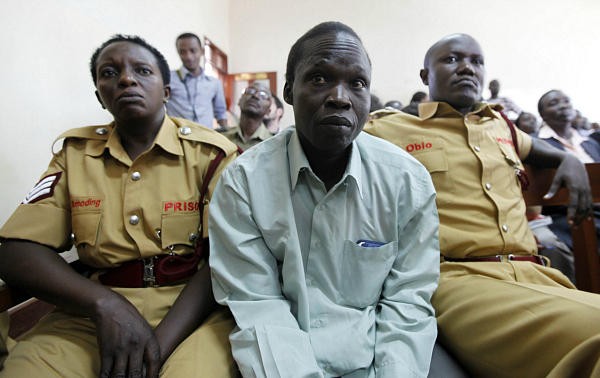
Thomas Kwoyelo awaits the start of his trial in Gulu, July 2011. Photo: Justice and Reconciliation Project

A few days ago, former Lord’s Resistance Army (‘LRA’) rebel commander, Thomas Kwoyelo, seemingly made a direct appeal to President Yoweri Museveni to be pardoned for crimes he is alleged to have committed in northern Uganda during the civil war. In an interview with the government-sponsored newspaper, the New Vision, Kwoyelo is quoted as saying:

“Having undergone various rehabilitation programmes, I have realised my past mistakes like any other Ugandan who erred.

I pray that the President gives me a second chance in life.” Kwoyelo, who is currently on a peacemaking and reconciliation programme, said he has benefited from the course and pledged to practice what he has learnt because it calls for reconciliation with God and the society he wronged.

“I am willing to work with the Government at all cost. Once considered for clemency, I swear never to go back to rebel activities,” he said.

This plea for clemency, and the timing of it, is intriguing for a number of reasons. But first, some background and context for those not familiar with the case of Thomas Kwoyelo.

Continue reading

On the Eve of the AU Summit: How the ICC is Being Defended

[This appeared originally on Justice in Conflict on 11 October, 2013.]

As African leaders publicly question their support for the International Criminal Court, a wide range of ICC supporters have rallied to its defense. Here, along with my co-author, Chris Tenove, we use a framework put forward in our recent paper in the International Journal of Transitional Justice to examine the allies and the forms of authority that the Court can turn to. (Chris is a doctoral candidate in Political Science at the University of British Columbia and a semi-regular JiC blogger.)

Representatives of African Union governments recently gathered to hold an “emergency summit” in Addis Ababa to discuss the relationship between AU members and the International Criminal Court. The summit was a critical test of the ICC’s authority. Several commentators have already considered the meeting’s significance, potential outcomes and implications (and offered their own suggestions). Here, we would like to discuss what the summit tells us generally about what international criminal justice is and how it works. In particular, we would point to claims about the ICC’s authority made by those who rally to its defense.

In a recently published paper, we propose a framework explaining which actors are involved in international criminal justice (ICJ), what kinds of fundamental rules and practices motivate them and what forms of authority they wield. Continue reading

ICC on trial before the African Union

“It is the culture of impunity and individuals who are on trial at the ICC, not Africa.”

Kofi Annan

 African Union

This weekend marks a very important moment in the history of international justice. In the wake of the controversial decision by the Kenyan Parliament to pass a motion to withdraw from the ICC, member states of the African Union (AU) are gathering in an extraordinary summit to discuss the possibility for African states to either withdraw from the Rome Statute or to end their cooperation with the ICC. Before analyzing the potential outcomes, here are couple of key points made by the AU Assembly in a report from May of this year:

“[The Assembly] DEEPLY REGRETS that the request by the African Union (AU) to the United Nations (UN) Security Council to defer the proceedings initiated against President Omar Al Bashir of The Sudan and Senior State Official of Kenya, in accordance with Article 16 of the Rome Statute of the International Criminal Court (ICC) on deferral of cases by the UN Security Council, has not been acted upon; […]

EXPRESSES CONCERN at the threat that the indictment of H.E Uhuru Muigai Kenyatta and H.E William Samoei Ruto, the President and Deputy-President of the Republic of Kenya respectively, may pose to the on-going efforts in the promotion of peace, national healing and reconciliation, as well as the rule of law and stability, not only in Kenya, but also in the Region.”

This weekend’s extraordinary summit seems to be a reaction to these regrets and concerns. Continue reading

You can have Laurent, but we’ll keep Simone

by Paul Bradfield

Simone and Laurent

Laurent and Simone Gbagbo, shortly after their arrest in 2011. Photo: The Guardian.

On Friday, reports from Côte d’Ivoire indicated that the government intends to lodge an admissibility challenge to the prosecution of Simone Gbagbo, the wife of former Head of State, Laurent Gbagbo, whose case is currently in the pre-trial phase at the International Criminal Court.

While a formal public motion has not yet been lodged to the Pre-Trial Chamber challenging admissibility, the government has released a statement saying:

‘The decision of the cabinet aims to have Mrs Gbagbo brought to trial by Ivorian courts, whose good reputation has been restored and which can hold a fair trial that will guarantee the rights of the defence.’

The statement comes just a few days after the African Union announced it would hold a summit next month to call for a mass withdrawal of African States from the ICC, to protest against the prosecution of the Kenyan President and Vice-President, Uhuru Kenyatta and William Ruto.

Côte d’Ivoire’s co-operation with the ICC regarding Simone’s transfer has not been as smooth when compared to that of her husband. His arrest warrant was issued under seal on 23 November 2011 and he was transferred to the seat of the court on 30 November 2011. It took a mere week to get him to the Hague. Compare that to his wife’s situation. The warrant for Simone was first issued under seal in February 2012 (it was subsequently made public in November 2012), yet 18 months later she remains in the custody of the Ivorian authorities.

Why the lack of cooperation with regard to Simone?  Continue reading

The Creation of an International Criminal Tribunal for the Democratic Republic of the Congo

pc3a9tition

(La version en langue française de la présente note est ci-après)

(Note: the translated portions of the original French letter below are not an official translation)

The summer of 2013 witnessed the launch of a petition, initiated by “52 prominent women” including the Congolese lawyer Ms. Hamuly Rély, calling for the creation of an International Criminal Tribunal for the Democratic Republic of the Congo (DRC).  The petition, which is still open for signature, was addressed to the French President François Hollande, the American President Barack Obama, the Secretary General of the UN Ban Ki Moon, former UN High Commissioner for Human Rights Mary Robinson, Chaiperson of the African Union Commission Nkosazana Dlamini-Zuma, Secretary General of the Organisation for Francophonie Abdou Diouf, President of the European Union Herman Van Rompuy, and the Presidency of the UN Security Council.

Before giving some personal thoughts (III) and addressing the potential judicial consequences of the establishment of such a Tribunal (II), this note focus on the content of the petition (I).

I. The Content of the Petition

1. Regarding the arguments and motivations:  Continue reading

Legal Representative’s report on “withdrawal” of 93 victims from Ruto case

[Updated September 16, 2013]

On June 5th, the Kenyan “Amani Peace Building and Welfare Association” sent a letter to the ICC claiming that 93 victims it had earlier helped to apply for participation at the pre-trial stage in Kenya 1 now wished to withdraw from the case. Last week, the Common Legal Representative, Wilfred Nderitu, filed his report on the withdrawal as requested by Trial Chamber V. The public redacted version is available here. It’s an interesting read and highlights some of the core challenges of making participation a reality on the ground: in particular, (1) the challenge of knowing what participating victims really think and want and (2) the challenge of knowing how to interpret the difficulties of international criminal legal work in the field. The Open Society Justice Initiative’s (OSJI) ICC Kenya Monitor also just wrote about this issue.

Nderitu

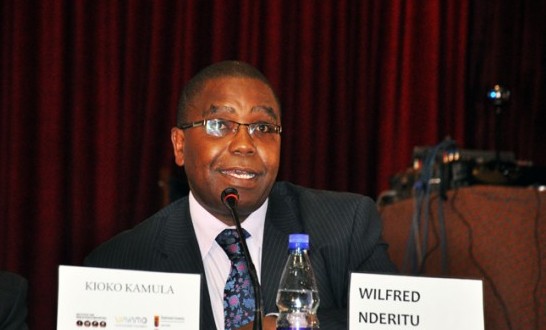
Common Legal Representative Wilfred Nderitu. Source: Reporting Kenya

Nderitu clarified that out of the 93 signatories, only 60 are within the scope of the case, including 13 whose status is “uncertain” (the other 33 being victims of the situation). He in-turn tried to consult with these 60 participants, all of whom come from Kenya’s Turbo region, to understand why they signed the letter.

Some apparently said that the letter had been brought to them to sign by some person or group (this is redacted), although the Chairman of the Amani organization claimed it was an initiative by and for the participating victims. Continue reading

Can International Law Save Syria?

Beyond The Hague is delighted to welcome Sophie Rigney for this timely piece on the relevance of international law to the Syrian situation.  This post is cross-posted from New Matilda, where it was first published on 28 August.

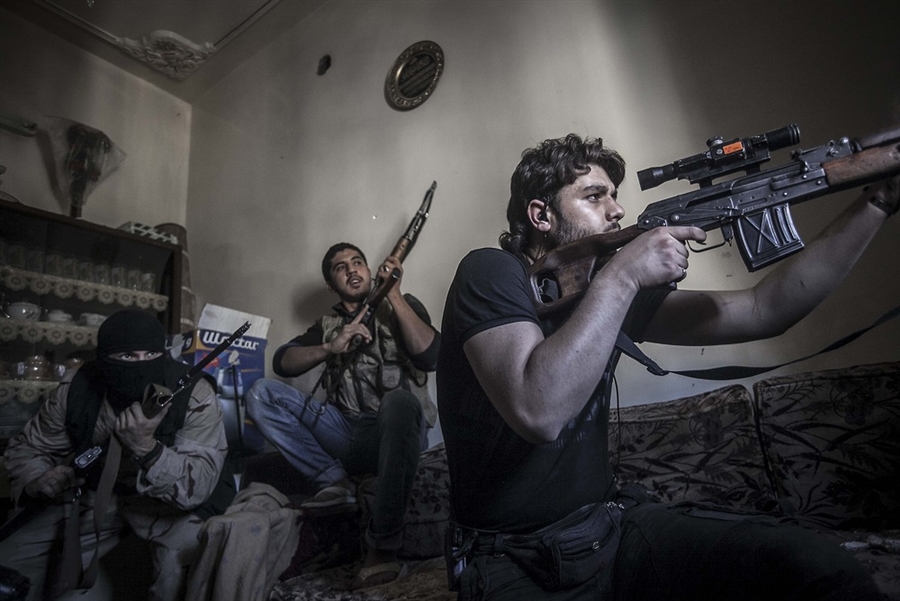
International law’s capacity to remedy the crisis in Syria is fraught. How will investigators collect evidence under sniper fire? What about Russia’s veto – and US intervention?

The alleged use of chemical weapons in Syria has galvanised calls for action to stop further mass atrocities, and to ensure those responsible are held to account. While the conflict in Syria has progressed for over two years and claimed between 80,000 and 100,000 lives, this chemical weapons attack has been widely perceived as having crossed a new line of unacceptability in the war. It has serious implications for the Syrian conflict.

Photo credit: NBC

Photo credit: NBC

There are two separate, but linked, issues of international law that arise from this recent attack.

The first is the question of external intervention through use of force (either by a country like the United States, a coalition of countries, or a regional cooperation institution like NATO).

In particular, what prerequisites would an external party or parties need to satisfy in order to legally use force in Syria? Military intervention is, in principle, contrary to Article 2(4) of the United Nations Charter. Recent comments by US President Barack Obama demonstrate that international law is very much to be considered as part of this decision-making process (or at least, that having a legal rationale for the use of force is seen to be preferable).

A United Nations Security Council Resolution Continue reading

What I say may not be true, but it’s always for peace.

BTH_22-8-13

During a recent conversation with one of Ituri’s many local leaders, he said something that I keep thinking about. He was telling me about his role in the community. In his words, he was a man of the peace, working always towards la pacification. Here is a rough translation of his words:

I’m a man of peace, always working for the pacification of Ituri, even during the war! People know this about me, so they come to me with questions and for information. And I tell them things. Sometimes they’re true and sometimes they’re not true. But they’re always for peace!

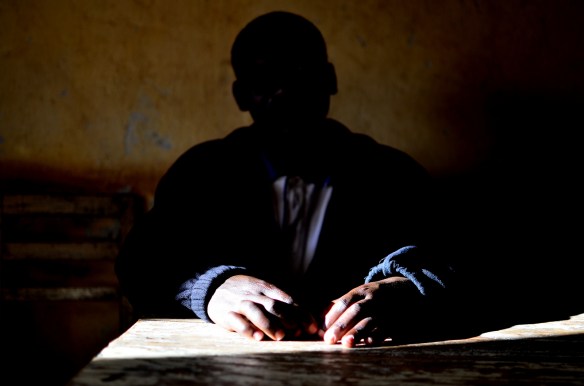
I’ve been thinking a lot about this man (full disclosure: he’s not the guy in the photo, which I took…but I think this photo kind of speaks to the issue). He clearly was on the side of peace. Even during the war he would leave the capital, Bunia, to get messages of peace to the villages in his native territory (if what he told me was true of course…). On one trip he was attacked with a machete (that’s true–he showed me the scar). So his response alarmed me. He said it with a large grin, almost as further proof that he really was a man of the peace: willing to lie in the name of peace!

Continue reading

Is Ituri ready for truth and reconciliation?

by Peter Dixon and Maria Elena Vignoli

Are Iturians ready to speak about the past? Photo credit: Peter Dixon

Are Iturians ready to speak about the past?
Photo credit: Peter Dixon

From 1999 to 2007, the Ituri district of the Democratic Republic of Congo’s northeastern Province Orientale was the scene of a deadly war that killed 60,000 and displaced over 500,000 people. In 2003, Ituri was home to at least six armed groups, with somewhere between 20,000 and 25,000 militia members. While the history is far more complex, the war was so violent in part because it pitched two of Ituri’s ethnic groups (Hema and Lendu) against each other. There’s plenty of background reading available. Dan Fahey’s 2013 Usalama Project Report is a good start.

As three out of four of the ICC’s Ituri-based trials approach their conclusion, the question looms, can Ituri be declared ‘post-conflict’? On the one hand, the November 2012 attacks in Bunia (organized and orchestrated at least in-part by the military and police), the presence of Justin Banaloki (aka “Cobra Matata”) in Walendu Bindi and Paul Sadala (aka “Morgan”) in Mambasa, and persisting land-related tensions are clear indicators that the risk of violence is still an ever-present reality for Iturians. On the other hand, reports are suggesting that a sustainable, if fragile, peace may have already emerged (also here). One thing is clear:

“There is an urgent need for a comprehensive peace process in Ituri to bridge the socio-economic and ideological gap between ethnic communities.” — Dan Fahey, Usalama Project, 2013

For the past several months, we have been interviewing leaders, stakeholders and the general population across three of Ituri’s five territories (Irumu, Djugu and Mahagi) on the issue. In total, we’ve held over 50 discussion groups and one-on-one interviews with over 170 customary leaders, civil society leaders, representatives (e.g. farmers’ representatives, youth representatives), authorities and victims’ groups. We also carried out a random survey of over 800 Iturians in Irumu and Djugu. Together with the Netherlands-based IKV Pax Christi, our goal is twofold: to better understand whether Iturians are ready to publicly speak about the acts and events of war, and if so, to identify what shape(s) this process could take. We’re still sifting through the data. In the meantime, here is some background context and some initial thoughts.

Continue reading

Journée de la justice pénale internationale : la quatrième tentative du 17 juillet 2013.

« La journée de la justice pénale internationale » est, avec « la journée pour la justice sociale », l’une de ces occasions annuelles et universelles qui permettent de communiquer sur un sujet d’intérêt commun. Ces deux journées partagent également, même si leur intitulé ne le précise pas, une vocation internationale (il manque en effet l’adjectif qualificatif « internationale » accolé au substantif « journée »). Bien que sa vocation initiale soit la promotion par diverses formes de communication de la justice pénale internationale, cette journée est aussi l’occasion de dresser un bilan et d’évoquer l’avenir.

C’est d’ailleurs à l’occasion d’un exercice de bilan que la création de cette journée a été décidée. En effet, l’Assemblée des États parties à la Cour pénale internationale, réunie pour la première conférence de révision du Statut de Rome,  a décidé « de célébrer dorénavant le 17 juillet, jour de l’adoption du Statut de Rome en 1998, comme la Journée de la justice pénale internationale » (ICC/RC/11/Decl.1). C’est ainsi que la première journée de la justice pénale internationale fut célébrée, le 17 juillet 2010. Mais il a fallut attendre l’année 2011 pour que l’institutionnalisation de cette journée prenne toute son ampleur. Sous l’impulsion du Greffe de la Cour pénale internationale, plusieurs activités avaient été prévues dans la ville du siège de la Cour, La Haye aux Pays-Bas, alors que le Tribunal pénal pour l’ex-Yougoslavie avaient été associé.

Cette année, quinze ans après l’adoption du Statut de Rome, la journée de la justice pénale internationale n’a visiblement pas la portée souhaitée. En effet, l’universalisme indispensable à ce type d’occasion, souffre sous deux aspects : géographique et matériel. Force est de constater que, géographiquement, la célébration de cette journée demeure limitée, en dehors des quelques États qui soutiennent la cour avec une vivacité permanente. En outre, la journée de la justice pénale internationale n’est pas célébrée par toutes les juridictions pénales internationales. Cette année, seule la Présidence de la Cour pénale internationale a communiqué une déclaration, singulièrement franche, de laquelle peuvent être retenus les éléments suivants :

Continue reading