Proof in International Criminal Trials

From 27-28 June 2014, Bangor Law School and the Bangor Centre for International Law will host a conference on proof in international criminal trials. It promises to be of great interest to academics and practitioners alike.

bangor

Here is the conference abstract:

“There is now an impressive body of literature on the precise scope, context and application of evidentiary rules in international criminal trials. However, the issues surrounding proof and reasoning on evidence in international criminal law have remained relatively under-examined to date. By bringing together judges, practitioners and leading scholars on evidence, international criminal procedure and analytical methods, this conference will comprehensively address issues related to proof in international criminal proceedings. These issues include, inter alia, the means by which inferences are drawn, how reasoning on findings of fact is articulated in judgments, and how witness credibility is assessed. Participants will analyse some of the challenges of fact-finding in the complex context of international criminal trials, which often involve large masses of evidence and hundreds of witnesses.”

Conference speakers include:

• Professor Terence Anderson, University of Miami;
• Professor Nancy Combs, College of William and Mary School of Law;
• Judge Teresa Doherty, Residual Special Court for Sierra Leone;
• Professor John Jackson, University of Nottingham;
• Dr Mark Klamberg, University of Uppsala;
• Dr Yassin M’Boge, Leicester University;
• Dr Yvonne McDermott, Bangor University;
• Professor Paul Roberts, University of Nottingham;
• Professor William Twining, University College London.

The programme for the conference is available here. To register, please follow this link.

Le Procureur de la Cour pénale internationale procède à un nouvel examen préliminaire de la situation en Irak

Le 13 mai 2014, le Procureur de la Cour pénale internationale, Madame Fatou Bensouda, a annoncé l’ouverture d’un nouvel examen préliminaire de la situation en Irak.

L’article 15§1 du Statut de Rome (le Statut) permet en effet au Procureur d’ouvrir un examen préliminaire de sa propre initiative, en l’absence de renvoi par un ou plusieurs États parties. Cet examen est la procédure par laquelle le Procureur détermine si une situation répond aux critères juridiques fixés par le Statut lui permettant de demander à la Cour d’ouvrir une enquête.

L’examen préliminaire comporte trois phases successives, qui correspondent à trois critères cumulatifs éclairant la décision du Procureur relative à l’opportunité de solliciter auprès de la chambre préliminaire l’ouverture d’une enquête :

– La compétence de la Cour : les éléments reçus par le Procureur doivent fournir une base raisonnable pour croire qu’un crime relevant de la compétence de la cour a été ou est en voie d’être commis (art. 53§1-a du Statut).

– La recevabilité de l’affaire : l’affaire doit être recevable, notamment au regard des exigences relatives à la gravité des faits et à la complémentarité avec les procédures nationales (art. 53§1-b du Statut).

– Les intérêts de la justice : l’ouverture d’une enquête doit « servir les intérêts de la justice » (art. 53§1-c du Statut).

En marge, il convient de relever la nature quasi-juridictionnelle des analyses du Bureau du Procureur, visant pourtant à solliciter auprès de la chambre préliminaire l’ouverture d’une enquête.

Continue reading

Administering Justice at the ICC: New Developments in Court’s first Article 70 case (Bemba 2)

by Danya Chaikel

*Updated 11 May

Danya Chaikel is a Canadian lawyer based in The Hague currently working for the International Association of Prosecutors, coordinating their Forum for International Criminal Justice. As a trial lawyer she previously practiced family, criminal defence and human rights law domestically for two years. She has also worked as an advocate for various human rights issues including international criminal justice, combatting trafficking in women and girls, and women refugee rights in organisations such as the International Criminal Court, the International Bar Association, the UN Refugee Agency and the Global Alliance Against Trafficking in Women. The views expressed here are her own. [danyachaikel AT gmail.com | @danyachaikel]

Bemba

Jean-Pierre Bemba Gombo, International Criminal Court

New Defence request for disqualification of Judge Cuno Tarfusser relating to his novel appointment of ‘independent counsel’ & a Decision clarifying the relationship between the Pre-Trial and Trial Chambers

Mr Jean-Pierre Bemba Gombo is the only International Criminal Court defendant in two cases before the Court. In the first main case (“Main Case”) he is alleged to be the former President and Commander-in-chief of the Mouvement de libération du Congo, and faces charges before Trial Chamber III (“TC III”) of war crimes (murder, rape and pillaging) and crimes against humanity (murder and rape) allegedly committed in the Central African Republic in 2002/2003. In the second case(“Bemba 2”) he is suspected before Pre-Trial Chamber II (“PTC II”) with four other individuals, including members of his former defence team, of bribing witnesses and coaching them to provide false testimony in the Main Case.

Continue reading

Is the ICC’s Trust Fund for Victims a Judicial Entity?

Last week, the Executive Director of the ICC’s Trust Fund for Victims, Pieter de Baan, spoke to the “Group of Friends of the ICC” in New York. This was the first of the Group’s proposed annual “high level meetings” to “highlight the importance of the ICC in relation to accountability, prevention and justice for victims.” This meeting focused on victims’ rights and the need for reparative justice. Mr. De Baan spoke about the work the TFV has carried out under its assistance (or “second”) mandate in northern Uganda and eastern DRC and of the work it may soon carry out under the banner of reparations in Ituri. Other speakers included the trauma expert Yael Danieli and Sandra Uwiringiyimana, a massacre survivor from eastern Congo who came to the U.S. as a refugee. Both Ms. Danieli and Ms. Uwiringiyimana delivered powerful and moving testimonies. The full program is available here.

TFV

The Trust Fund for Victims (trustfundforvictims.org)

The meeting did not, however, venture into the tricky details of how exactly reparations will work at the ICC, still a subject of lively debate almost two years after the Court’s first reparations order (there was also a debate over whether the 7 August, 2012 Decision counted as an order or just as a decision on principles, which I don’t go into here). Indeed, despite the TFV’s valuable experience delivering assistance to vulnerable populations in ICC situation countries, the precise role it is supposed to play in a Court-ordered reparations process is still not clear.      Continue reading

David van Reybrouck’s “Congo” now available in English

Just a short note for those interested in the Congo (Dem. Rep.) and its history. David van Reybrouck‘s 600-page, 2010 history has been released in English by HarperCollins, translated by Sam Garrett. Originally published in Dutch as “Congo: Een geschiedenis” (Congo: A history) and now in English as “Congo: The Epic History of a People”, this book has received very positive reviews and a number of awards as a history that is both thorough and accessible.

Congo_EpicHistory

Congo_EenGeschiedenis


One thing I’ve heard and seen in reviews is that van Reybrouck uses the “everyday” lived experience of Congolese to weave together a rich and compelling narrative of a history whose treatments can feel overly exotic or impenetrably complex. Not having actually read the book myself, though, I’ll stop there and point readers to those who have (from AllAfrica):

Indeed, Van Reybrouck would have little difficulty finding written sources from European missionaries, tradesmen and slavers who first arrived in the country in 1482, but it was the personal testimony of Congolese people today that was of most interest to him. He wanted to hear from the people whose life stories collectively make up the turbulent history of the African giant. But rather than merely asking his interviewees about their opinions of times past, Van Reybrouck wanted to know what his informants ate, what clothes they wore, what their houses looked like when they were children, and whether they went to church. It is from this tangle of everyday facts of life that Van Reybrouck spins a fine thread with which he eventually knits together this detailed and well-researched biography, thoroughly rooted in the lived experience of the Congolese.

France vs the rest of the world – who is right?

 by Paul Bradfield

On 26 February, the highest court in France, the Court of Cassation, overturned a ruling given by an appeals court last year which had approved the extradition of Claude Muhayimana and Innocent Musabyimana to Rwanda to stand trial.  It also upheld a ruling which had rejected the extradition of Laurent Serubuga.

Three men

Claude Muhayimana (L) and Innocent Musabyimana (R), the two Rwandan men accused of taking part in the massacre of ethnic Tutsis during the Rwandan genocide, wait outside a courtroom after their extradition hearing at the courthouse in Paris (Photo: AFP)

Muhayimana is accused of taking part in the massacre of Tutsis in the western town of Kibuye, while Musabyimana is alleged to have been involved in the killings in the north-western province of Gisenyi. Serubuga was Rwanda’s deputy army chief-of-staff at the time of the genocide.

In essence, the court ruled that the men could not be tried retroactively for crimes which were not legally defined at the time it was allegedly committed. Continue reading

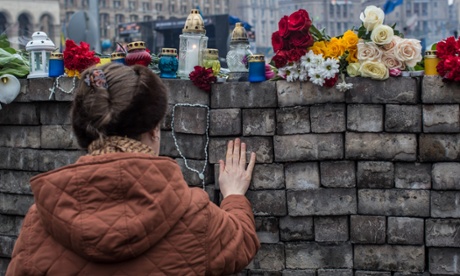
“Maidan” v. Yanukovych et al.: Ukraine and the ICC?

Image

Photo credit: Guardian

Keeping in mind the situation in the streets of Kiev this time a week ago, it is difficult to comprehend the speed of changes taking place in Ukraine over the past few days. The agreement reached last Friday between the opposition and president Yanukovych has now become largely outdated. Point number four, however, remains relevant:

“Investigation into recent acts of violence will be conducted under joint monitoring from the authorities, the opposition and the Council of Europe”

Only yesterday morning we learned that the new Ukrainian authorities issued an arrest warrant for Viktor Yanukovych for “mass murder of peacefully demonstrating citizens”. Today, the Parliament of Ukraine voted in favour of prosecuting former president Viktor Yanukovych, former interior Minister Vitali Zakharchenko and former Prosecutor-General Viktor Pshonka at the International Criminal Court.  Continue reading

Hate Crime Against Humanity? Persecution on the Grounds of Sexual Orientation under the Rome Statute

by Rosemary Grey

Rosemary Grey joins Beyond The Hague today with a post that questions the ‘constructive ambiguity’ of the gender language in Article 7(3) of the Rome Statute and asks whether persecution on the grounds of sexual orientation can be considered a crime under the jurisdiction of the International Criminal Court. Rose is a PhD Candidate at the School of Social Sciences, Faculty of Arts and Social Sciences, University of New South Wales. She can be reached at r.grey@unsw.edu.au and here.

The Sochi Games has focused international attention on Russia’s human rights record, particularly its laws that discriminate and sow prejudice against lesbian, gay, bisexual, transgender or intersex (LGBTI) people. UN Secretary-General Ban Ki-moon nodded at this issue in his address to the Olympic Committee on February 6, stating:

We must all raise our voices against attacks on lesbian, gay, bisexual, transgender or intersex people. We must oppose the arrests, imprisonments and discriminatory restrictions they face.

Ban’s call to action reflects the fact that in recent years, the UN has become increasingly vocal in promoting LGBTI rights. For example in 2011, the Office of the High Commissioner for Human Rights (OHCHR) published its first report on discrimination and violence on the grounds of sexual orientation and gender identity. The report documents targeted killings, rapes, and assaults of LGBTI people, and highlights decisions and general comments of treaty bodies that confirm that discrimination on the ground of sexual orientation is prohibited under international human rights law.[1]  Building on this momentum, in 2013 the Human Rights Office launched the  “Free and Equal” campaign, aimed at combating discrimination against LGBTI people worldwide.

AmsterdamProtest

August 2013 Protest in Amsterdam. Source: AFP

Meanwhile, discrimination against LGBTI people under domestic law continues in many states, and in some places is getting worse. Russia is not an isolated example: several States Parties to the Rome Statute are also moving backwards on LGBTI rights. For example, Uganda, which in 2004 became the first State Party to refer a situation to the ICC and in 2010 had the privilege of hosting the Rome Statute Review Conference, is in the process of enacting legislation that prescribes life imprisonment for people convicted of homosexual acts.  Nigeria, another State Party, has recently enacted anti-homosexuality laws that UN High Commissioner for Human Rights Navi Pillay describes as “draconian.”

Continue reading

What a difference a year (or 8) makes: Bosco Ntaganda, justice and politics in the Congo

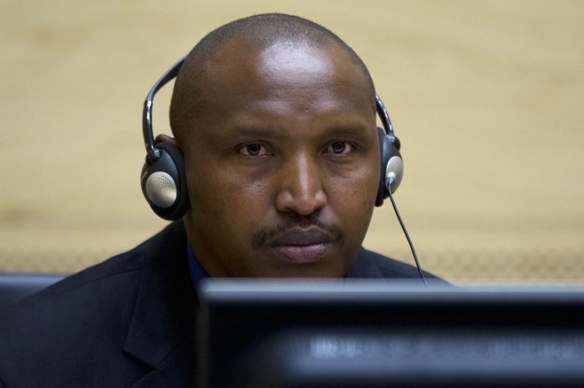
This week, Bosco Ntaganda is in court for the confirmation of charges hearing at the ICC. You can watch the Court’s live stream (with a slight delay) here. Ntaganda has been wanted by the ICC since 2006, when Luis Moreno Ocampo was issuing the Court’s first arrest warrants, including that for for Thomas Lubanga Diylo. Lubanga would go on to become the Court’s first-ever conviction. Ntaganda would continue to play a leading role in one of the world’s worst conflicts in history before surrendering in Kigali in March of last year. He’s now been in ICC custody for about a year and a wanted war criminal for almost 8. It’s easy to forget how we got here.

Bosco Ntaganda

The arrest warrant for Lubanga was issued under seal on 10 February, 2006 and unsealed a little over a month later, one day after he was transferred to The Hague. The arrest warrant for Bosco was issued under seal on 22 August, 2006 and unsealed almost 2 years later, about 5 years before he would surrender in Kigali. Before that, Ntaganda lived openly in Goma, notoriously flaunting his most-wanted status. In scenes of disturbing irony, Ntaganda would play tennis and dine at the same clubs and restaurants as the aid workers and UN staff charged with supporting the victims of the war in which he played a leading role.

Continue reading

What does recognition mean?

[updated 11 February, 2014]

The element of recognition that is part and parcel of reparations, and that makes them different from mere compensatory schemes, will typically require targeting victims for special treatment. This is part of what it means to give them recognition.

– Pablo de Greiff

It’s well-accepted today in international justice circles that victims want recognition. It’s also well-accepted that recognition is good for victims. Mariana Goetz of REDRESS said recently, for example, that “the quality of the recognition that the process provides [victims] may be more important than the final result.” But what does recognition mean? And how is it good for victims of grave crimes?

Photo

Source: Report of the Panel on Remedies and Reparations for Victims of Sexual Violence in the Congo (OHCHR)

On the one hand, there’s the assumption that victims want to be recognized as such. “Victims have indicated they want to be recognized by the international community at large,” according to the Registry, “as victims of the crimes committed against themselves, their families, neighbors, and ethnic groups.”

Continue reading