Sainovic Appeal rejects ‘specific direction’, but was it necessary?

by Alex Fielding, @alexpfielding on twitter

In a dramatic turn of events, the ICTY Appeals Chamber in Sainovic et al has, with a 4-1 majority,  “unequivocally rejected” the Perisic Appeal’s finding that specific direction is an element of aiding and abetting liability.

Lukic, Pavkovic, Lazarevic, Sainovic (L to R), photo: bigportal.ba

Specific direction has been subject to a fascinating debate in the blogosphere (see Kevin Heller’s defence of specific direction here, and the critiques by Marko Milanovic here and James Stewart here and here). Continue reading

The latest twist in the case of Thomas Kwoyelo

by Paul Bradfield

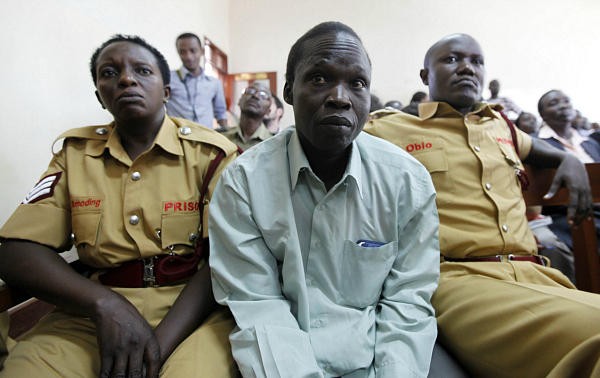
Kwoyelo

Thomas Kwoyelo awaits the start of his trial in Gulu, July 2011. Photo: Justice and Reconciliation Project

A few days ago, former Lord’s Resistance Army (‘LRA’) rebel commander, Thomas Kwoyelo, seemingly made a direct appeal to President Yoweri Museveni to be pardoned for crimes he is alleged to have committed in northern Uganda during the civil war. In an interview with the government-sponsored newspaper, the New Vision, Kwoyelo is quoted as saying:

“Having undergone various rehabilitation programmes, I have realised my past mistakes like any other Ugandan who erred.

I pray that the President gives me a second chance in life.” Kwoyelo, who is currently on a peacemaking and reconciliation programme, said he has benefited from the course and pledged to practice what he has learnt because it calls for reconciliation with God and the society he wronged.

“I am willing to work with the Government at all cost. Once considered for clemency, I swear never to go back to rebel activities,” he said.

This plea for clemency, and the timing of it, is intriguing for a number of reasons. But first, some background and context for those not familiar with the case of Thomas Kwoyelo.

Continue reading

le refus saoudien de la qualité de membre non-permanent du Conseil de sécurité.

Éléments de contexte :

La 69ème élection du Conseil de sécurité des Nations unies a eu lieu le 17 octobre 2013 pendant la 68ème session de l’Assemblée générale des Nations unies au siège des Nations unies, à New York.

Le Conseil de sécurité se compose de quinze Membres des Nations unies, dont cinq permanents et dix élus par l’Assemblée générale qui « tient spécialement compte, en premier lieu, de la contribution des Membres de l’Organisation au maintien de la paix et de la sécurité internationales et aux autres fins de l’Organisation, et aussi d’une répartition géographique équitable » (Charte des Nations unies, article 23).

Chaque année, l’Assemblée générale élit cinq membres non-permanents, soit la moitié de la totalité des sièges non-permanents, pour un mandat de deux ans. L’Assemblée générale, par sa résolution A/Res/18/1991, intitulée : « question d’une représentation équitable au Conseil de sécurité et au Conseil économique et social », adoptée en date du 17 décembre 1963, avait considéré que « la composition actuelle du Conseil de sécurité était inéquitable et déséquilibrée ». Elle avait ainsi précisé, dans cette même résolution, les critères pertinents de la « répartition géographique équitable » : 5 membres élus parmi les États d’Afrique et d’Asie ; 1 membre élu parmi les États d’Europe orientale ; 2 membres élus parmi les États d’Amérique latine et des Caraïbes ; et 2 membres élus parmi les États d’Europe occidentale et autres États. Il est intéressant de mettre ces critères en perspective avec ceux, actuels, provenant du Département de l’Assemblée générale et de la gestion des conférences. En effet, le groupe des États d’Afrique et d’Asie a été distingué en deux groupes. L’un intitulé « groupe des États d’Asie-Pacifique », l’autre intitulé « groupe des États d’Afrique ». Par ailleurs, il existe une pratique, qui semble à ce stade bien établie, revenant à attribuer un siège à un État arabe, alternativement entre les groupes des États d’Asie-Pacifique et d’Afrique.

L’élection du 17 octobre 2013 visait le renouvellement de cinq des dix sièges non-permanents du Conseil de sécurité. Les nouveaux membres étant élus pour un mandat de deux ans commençant le 1er janvier 2014 et s’achevant le 31 décembre 2015. Les décisions de l’Assemblée générale sur les questions importantes, dont fait partie l’élection des membres non-permanents du Conseil de sécurité, sont prises à la majorité des deux tiers des membres présents et votants (Charte des Nations unies, article 18 paragraphe 2).

Pour cette élection, les 5 membres sortants sont : l’Azerbaïdjan (groupe des États d’Europe orientale), le Guatemala (groupe des États d’Amérique latine et des Caraïbes), le Maroc (groupe des États d’Afrique), le Pakistan (groupe des États d’Asie-Pacifique), et le Togo (groupe des États d’Afrique). Les membres sortant ne sont pas immédiatement rééligibles.

Les membres qui ont été élus sont : le Nigeria (groupe des États d’Afrique), le Tchad (groupe des États d’Afrique), le Chili (groupe des États d’Amérique latine et des Caraïbes), la Lituanie (groupe des États d’Europe orientale), et l’Arabie saoudite (groupe des États d’Asie-Pacifique). Il est à noter que deux candidatures se sont retirées. S’agissant du groupe des États d’Afrique, la Gambie était initialement candidate. S’agissant du groupe des États d’Europe orientale, la Géorgie était initialement candidate.

Continue reading

ADC-ICTY Legacy Conference in the Hague – 29 November 2013

The ADC-ICTY Legacy Conference will take place in the Bel Air Hotel, The Hague, on 29 November 2013. The keynote speech will be delivered by H.E. Judge Theodor Meron, ICTY President. Speakers and moderators include The Right Hon. Lord Iain Bonomy, Judge Bakone Justice Moloto, Judge Howard Morrison, as well as renowned Defence Counsel. The conference is organised with the support of the Law Faculty of the Erasmus University Rotterdam.

Courtroom-ICTY

Credit: ICTY

You can follow the ADC-ICTY Legacy Conference on Twitter – follow @ADCICTYLegacy. @ADCICTYLegacy aims at providing information about the conference and the publication that will follow.  On 29 November, they will be live tweeting from the conference for those who are unable to attend. The schedule is available here.

To register for the conference, please click here and for any other information on the conference, please contact Isabel Duesterhoeft at iduesterhoeft@icty.org.

For information on social media issues relating to the conference, please contact Anna Katulu at akatulu@icty.org.

A Proposal to Compensate the Acquitted and Promote Reconciliation in the Balkans

by Alex Fielding, @alexpfielding on twitter

In light of the ongoing Seselj drama following the disqualification of Judge Harhoff for his pro-conviction bias (see my earlier post here and recent developments here) and the controversial acquittals of Momcilo Perisic, Ante Gotovina and Mladen Markac by the ICTY Appeals Chamber, and those of Jovica Stanisic and Franko Simatovic at trial, I keep coming back to the question of compensation for acquitted persons for the years spent in detention. While this may not, on its face, be a popular proposition for human rights activists and a general public whose primary concern is ‘ending impunity’, consider the following figures.

Momcilo Perisic, Photo: ICTY

According to my calculations, Momcilo Perisic, former Chief of the General Staff of the Yugoslav Army, spent approximately 4 years, 5 months and 10 days in detention prior to his acquittal on appeal on 28 February 2013 (note that these figures are NOT including the periods of provisional release from the ICTY’s detention facility in The Hague, which in Perisic’s case amounted to an additional 3.5 years).

Ante Gotovina, former Colonel General of the Croatian Army and Commander of ‘Operation Storm’, spent approximately 6 years, 11 months and 12 days in detention prior to his acquittal on appeal on 16 November 2012.  His co-accused Mladen Markac, former Operational Commander of the Croatian Special Police, spent 5 years, 7 months and 12 days in detention prior to his acquittal on appeal.

Ante Gotovina & Mladen Markac, Photo: Guardian

Ante Gotovina & Mladen Markac, Photo: Guardian

Including time spent on provisional release (I couldn’t find the relevant detention figures that do NOT include provisional release), it took 10 years from the time Jovica Stanisic, former Chief of the Serbian State Security Service, was sent to the ICTY to his acquittal at trial on 30 May 2013.  His co-accused Franko Simatovic, member of the Serbian State Security Service, waited 9 years, 11 months and 19 days for his acquittal at trial. Both men have been released pending the Prosecution’s appeal. They have also submitted arguments on appeal to the effect that the trial judgment was tainted by the bias of one of the sitting judges on the case, Judge Harhoff, but more on this later.

Vojislav Seselj, former President of the Serbian Radical Party, has already spent 10 years, 8 months and 25 days in detention (although 4 years and 9 months were a result of his three convictions for contempt of court) as he awaits a trial judgment that may be fatally flawed. Closing arguments wrapped up in March 2012 and the judgment had been scheduled for delivery on 30 October 2013 but then Judge Harhoff was disqualified for bias on 28 August 2013. Since there was no reserve judge in this case, the acting President of the ICTY Judge Agius controversially appointed Judge Niang to replace Judge Harhoff on 31 October 2013, even though he was not present during the entirety of the trial itself.

Continue reading

From Justice Delayed to Justice Denied: Katyń in Strasbourg

This is cross-posted from Justice in Conflict, where it was first published on 31 October 2013.

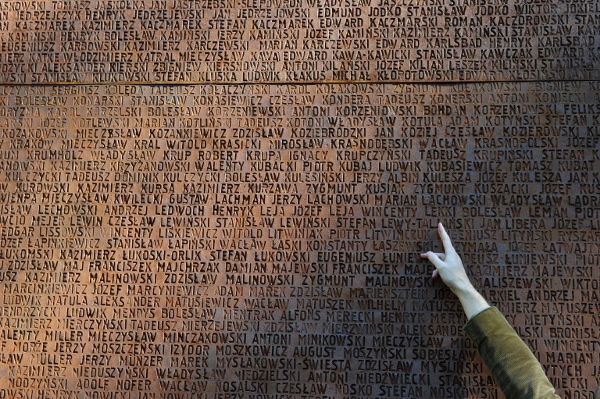
The Katyń massacre took place between April and May 1940 when 20,000 thousand  Polish officers and officials were executed by NKVD, the Soviet special police. After decades of denial, Russia publicly acknowledged Soviet responsibility for the massacre in 1990. But the  entire truth about what happened in the forests of Katyń has remained out of reach. Many believe Russia has not done enough in coming clean about the massacre.

Katyń massacre monument in Kharkiv, photo: AFP / Sergei Supinsky

Last week, the Grand Chamber of the ECHR delivered its final decision in Janowiec et al. v. Russia (other comment here). The case before the ECHR concerned the quality of investigations conducted by Russian authorities into the Katyń massacre. These started in 1990 and ceased in 2004, following the decision of the Russian authorities to re-classify as “top-secret” 36 volumes of files and  to discontinue the investigation. The applicants before the Court argued that Russian authorities breached their rights by failing to carry out an effective investigation into the death of their relatives and displayed a dismissive attitude towards the applicants’ requests for information about their relatives’ fate.

Continue reading

Forthcoming final judgement of the ECHR in the Katyn case

Today, the Grand Chamber of the European Court of Human Rights is expected to announce its final judgement in the case of Janowiec and others v. Russia (applications no. 55508/07, 9520/09 ). The case originated from the events of April and May 1940 when an estimated 21,000 Polish officers and officials were detained in the Kozielsk, Starobelsk, and Ostashkov camps before being executed by the Soviet secret police (NKVD) in Katyń forest and the Kharkov and Tver NKVD prisons. The bodies were buried in mass graves.

When the graves were first discovered in 1943, Soviet authorities put the blame on the Nazis (see Burdenko Commission). The crime was ignored at the Nuremberg trials (see the commentary of Prof. Schabas here and here) and the “official” version of the events was imposed for the next 50 years. Continue reading

On the Eve of the AU Summit: How the ICC is Being Defended

[This appeared originally on Justice in Conflict on 11 October, 2013.]

As African leaders publicly question their support for the International Criminal Court, a wide range of ICC supporters have rallied to its defense. Here, along with my co-author, Chris Tenove, we use a framework put forward in our recent paper in the International Journal of Transitional Justice to examine the allies and the forms of authority that the Court can turn to. (Chris is a doctoral candidate in Political Science at the University of British Columbia and a semi-regular JiC blogger.)

Representatives of African Union governments recently gathered to hold an “emergency summit” in Addis Ababa to discuss the relationship between AU members and the International Criminal Court. The summit was a critical test of the ICC’s authority. Several commentators have already considered the meeting’s significance, potential outcomes and implications (and offered their own suggestions). Here, we would like to discuss what the summit tells us generally about what international criminal justice is and how it works. In particular, we would point to claims about the ICC’s authority made by those who rally to its defense.

In a recently published paper, we propose a framework explaining which actors are involved in international criminal justice (ICJ), what kinds of fundamental rules and practices motivate them and what forms of authority they wield. Continue reading

ICC on trial before the African Union

“It is the culture of impunity and individuals who are on trial at the ICC, not Africa.”

Kofi Annan

 African Union

This weekend marks a very important moment in the history of international justice. In the wake of the controversial decision by the Kenyan Parliament to pass a motion to withdraw from the ICC, member states of the African Union (AU) are gathering in an extraordinary summit to discuss the possibility for African states to either withdraw from the Rome Statute or to end their cooperation with the ICC. Before analyzing the potential outcomes, here are couple of key points made by the AU Assembly in a report from May of this year:

“[The Assembly] DEEPLY REGRETS that the request by the African Union (AU) to the United Nations (UN) Security Council to defer the proceedings initiated against President Omar Al Bashir of The Sudan and Senior State Official of Kenya, in accordance with Article 16 of the Rome Statute of the International Criminal Court (ICC) on deferral of cases by the UN Security Council, has not been acted upon; […]

EXPRESSES CONCERN at the threat that the indictment of H.E Uhuru Muigai Kenyatta and H.E William Samoei Ruto, the President and Deputy-President of the Republic of Kenya respectively, may pose to the on-going efforts in the promotion of peace, national healing and reconciliation, as well as the rule of law and stability, not only in Kenya, but also in the Region.”

This weekend’s extraordinary summit seems to be a reaction to these regrets and concerns. Continue reading

Charles Taylor Appeal: Why its rejection of ‘specific direction’ doesn’t matter

by Alex Fielding, @alexpfielding on twitter

The international criminal law world has been eagerly awaiting the Charles Taylor appeal to see whether the controversial ‘specific direction’ standard for aiding and abetting liability from the ICTY’s Perisic Appeal would be followed by the Special Court for Sierra Leone (“SCSL”).  The SCSL Appeals Chamber rejected Taylor’s appeal against a 50-year sentence for aiding and abetting crimes committed by Revolutionary United Front (“RUF”) and Armed Forces Revolutionary Council (“AFRC”) during Sierra Leone’s bloody civil war. The full text of the Taylor Appeal can be found here.

Photo credit: Guardian

Photo credit: Guardian

To recap, Perisic was acquitted because, considering his geographic remoteness from the crimes, his involvement in providing general assistance to the Bosnian Serb army, an organization with lawful and unlawful activities, was not ‘specifically directed’ towards their criminal activities.

For background on the ‘specific direction’ debate, James Stewart has strongly opposed this development here and here, and Kevin Heller provides a counterargument here.

Much has been discussed already in the blogosphere on the Taylor Appeal’s vigorous rejection of Perisic and the ‘specific direction’ requirement (see Kevin Heller on the SCSL’s incoherent and selective analysis of custom re: specific direction and Marko Milanovic’s post here).

Specific direction has been frequently misunderstood.  Continue reading